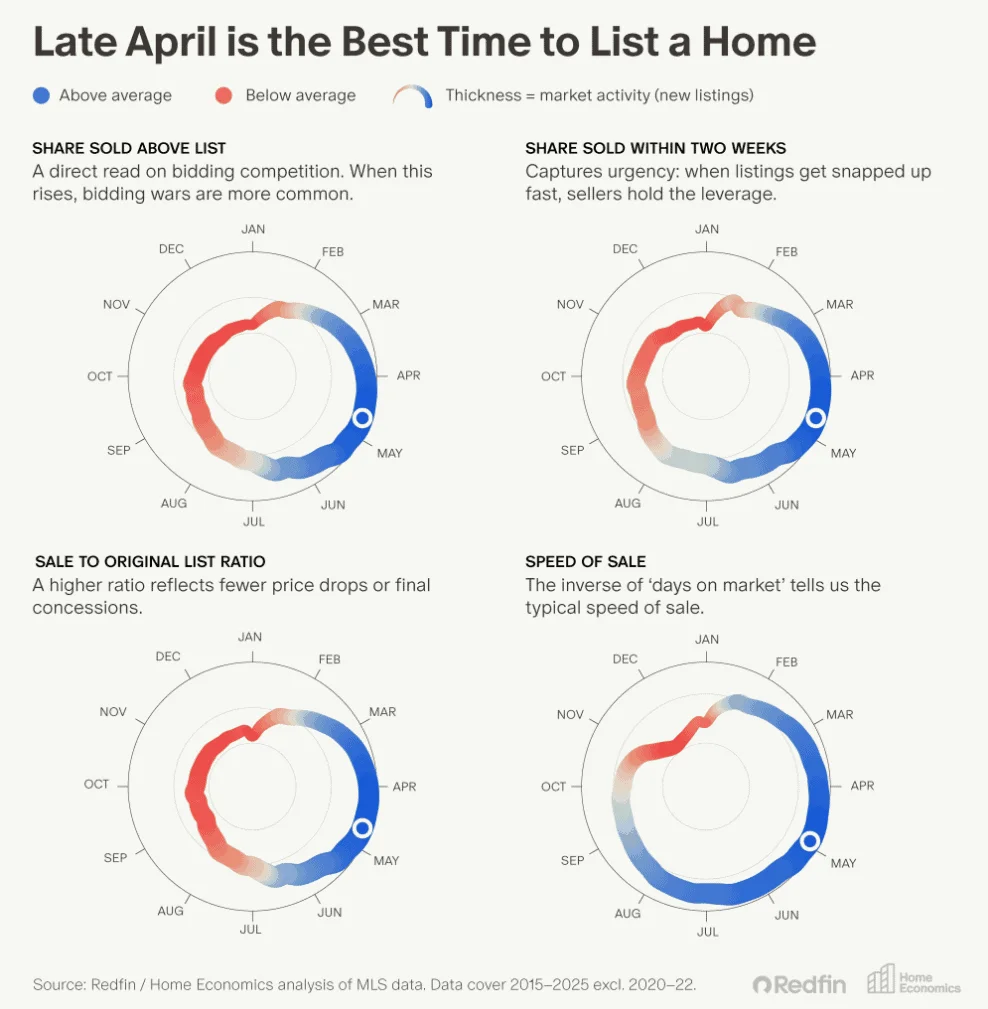
As the housing market grapples with fluctuating demand and near-record prices, understanding the optimal timing for home sales has never been more critical. For sellers navigating an increasingly competitive landscape, a strategic approach to timing not only influences how quickly a home sells but also the sale price. Central to this is the insight that late April emerges as the prime window for most sellers—where they can see homes closing faster and, importantly, at better prices.
The Significance of Late April
According to recent data from Redfin, homes listed in late April stand a stunning 18% higher chance of selling above their list prices. This peak timeframe offers a strategic advantage as it aligns with heightened buyer activity, devoid of overwhelming inventory that characterizes later spring months. Sellers poised to enter the market at this time can capitalize on both increased buyer interest and a favorable inventory-to-demand ratio.
However, Daryl Fairweather, Chief Economist at Redfin, emphasizes that market conditions vary widely by locality. Cities like San Jose see their peak selling window in mid-March, contrasting starkly with Philadelphia, where late May is favorable. This geographical disparity reveals that a one-size-fits-all strategy is ineffective; sellers must adapt their strategies to local dynamics.
Dynamics Shift in a Competitive Market
The current housing market is indicative of complexities that need addressing. With only a fraction of buyers actively searching due to economic uncertainties, such as rising mortgage rates and inflation, those who remain are typically more discerning. This environment increases the pressure on sellers to refine their listing strategies and pricing tactics. Simply listing at the right time isn't enough; preparation and awareness of local market conditions are essential.
Asad Khan, a senior economist at Redfin, describes mid-spring's allure beyond just timing. Factors such as favorable weather, family-oriented school schedules, and heightened curb appeal combine to create a potent selling atmosphere. This seasonal uptick aligns buyer intentions with the need to move before the new school year, further bolstering demand.
Choosing the Optimal Day to List
Additionally, sellers can gain an edge by meticulously selecting their listing day. Research indicates that homes listed on Thursdays sell for approximately $3,000 more and five days faster than those listed on weekends. The midweek advantage is rooted in buyer psychology: listings that go live just before the weekend remain top of mind for buyers planning their tours. Conversely, listings that hit the market over the weekend may become overshadowed by newer entries early in the week.
Nuanced Timing Across Cities
Understanding that the best time to sell can shift based on the city underscores the intricacies of regional markets. For instance, in contemporary markets, San Jose is identified for its mid-March cutoff, while Philadelphia's window extends nearly two months later. This flexibility necessitates sellers work closely with local agents for insights tailored not just to market averages, but individual circumstances and local trends.
Seasonal Trends and Their Impact
Beyond immediate timing considerations, sellers must also grapple with larger seasonal trends. While warmer months traditionally attract more buyers, the housing market fluctuates seasonally, signifying higher activity during spring and summer but experiencing downturns in fall and winter.
- Spring: The quintessential season of opportunity, it features the highest levels of activity for buyers and sellers alike.
- Summer: Peak listings occur, and buyers begin to find more leverage, although holiday schedules can affect activity.
- Fall: An in-between phase where negotiations may yield concessions more frequently.
- Winter: The more challenging environment for sellers, often yielding longer times on the market and fewer offers.
Market seasonality, of course, varies according to geography. In areas with limited housing supply, such as larger metropolitan centers, sellers confront steeper competition during peak times, necessitating precise timing and strategic listing decisions.
Strategies for A Successful Sale
In a subdued buyer's market, how sellers position their homes for sale could significantly impact their ultimate success. Here are actionable strategies sellers should adopt:
- Hire a home inspector: Discover potential issues prior to listing to address them upfront.
- Make strategic repairs: Focus on updates most appealing to buyers.
- Enhance curb appeal: Simple landscaping can dramatically improve first impressions.
- Stage the home: Present a space where potential buyers can imagine themselves living.
- Utilize quality marketing materials: Impactful photos and compelling descriptions can draw additional interest.
- Set competitive pricing: Be realistic according to current trends; overpriced homes often sit longer and deter potential buyers.
- Collaborate with an experienced agent: Leverage their insights and negotiation skills to maximize sale outcomes.
Evaluating the Right Market Timing
For homeowners contemplating a sale, the current market favors a nuanced understanding of local dynamics, and sellers are encouraged to consider broader economic indicators, such as interest rates and general housing trends. Engaging with a trusted real estate agent offers insights not only into timing but can shape how a property is presented and marketed effectively.
While late April is broadly recognized as the peak time for home sales, the ultimate decision must align with personal circumstances and local market conditions. Understanding the unique characteristics of each local market allows sellers to better navigate this challenging landscape and enhance their selling prospects.
Ultimately, in a time marked by complexity and change, sellers that prioritize strategic timing and thorough preparation will find themselves better positioned to succeed in a demanding market.
For additional insights on market trends, refer to the full report detailing these findings.