Buyer cancellations are more common, but they remain a minority outcome: an estimated 10% to 15% of contracts fall through, according to Redfin and Cotality. For sellers, the practical issue is less the headline trend than the reasons deals unravel—and which of those risks can be addressed before an offer is accepted.
Buyers are weighing tighter budgets against a wider choice of homes. Redfin says that combination can make them more willing to leave a deal if an inspection finds problems, an appraisal comes in low or negotiations over concessions stall. An accepted offer, then, is a meaningful step toward closing, but not a guarantee.
Inspection findings lead the list
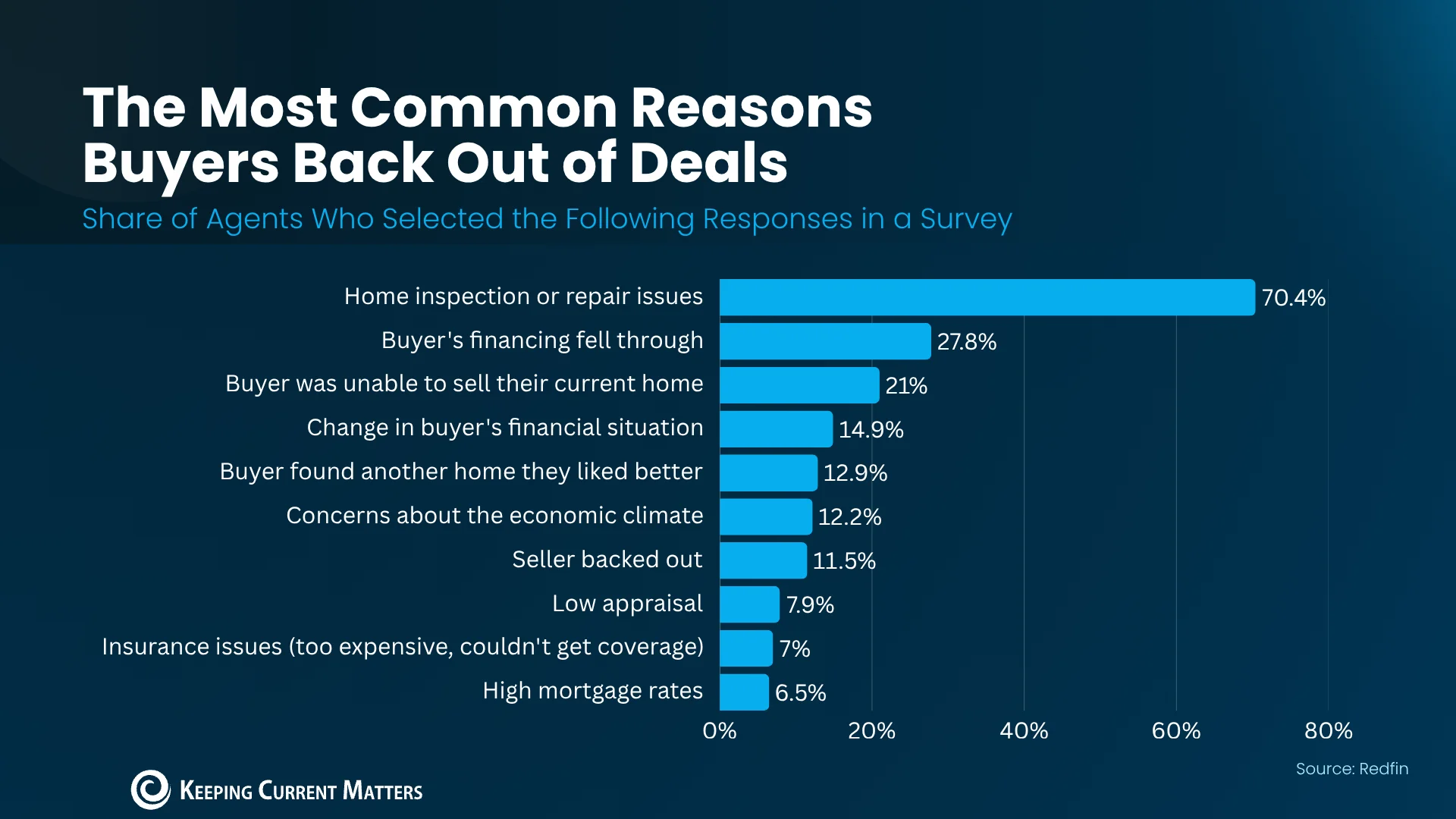
In a Redfin survey, agents most often pointed to inspection or repair issues as a reason buyers back out: 70.4% cited them. That makes the condition of the property one of the clearest areas for sellers to assess before listing.
A pre-listing inspection can surface concerns early enough for the seller to consider a repair, a price adjustment or disclosure before negotiations begin. It also gives the seller a chance to evaluate likely questions with their agent instead of reacting under pressure after a buyer’s inspection.
There’s no single response that fits every property. The value lies in knowing what may come up and deciding how to address it before a buyer makes the issue part of the deal.
Financing remains a source of uncertainty
Buyer financing was the second most cited risk in the survey, at 27.8%. A pre-approval doesn’t ensure that a loan will reach closing, and mortgage rates can add pressure to a buyer’s budget as the transaction progresses.
Sellers can’t control a buyer’s loan approval, but they can ask their agent to review the buyer’s financing and the offer’s terms before making a decision. When affordability is a sticking point, the parties may also consider whether incentives could help bridge the gap. Depending on the offer, that might include closing cost credits or a mortgage-rate buydown.
Those options don’t remove financing risk. They can, however, give both sides another way to address affordability when the rest of the transaction makes sense.
Another home sale can affect yours
About 21% of agents in the Redfin survey identified a buyer’s inability to sell their current home as a reason a deal can fail. When a buyer needs proceeds from their own sale to purchase your property, a setback in that transaction may affect yours as well.
Before accepting an offer with a home-sale contingency, sellers should understand where the buyer’s property stands and what the contingency means for timing. An agent can help assess the buyer’s progress and explain what protections may be appropriate for the seller’s situation.
That review matters because a contingency can connect two separate transactions. If the buyer’s home doesn’t sell as expected, the seller may face a delay or need to return to the market.
Preparation can reduce surprises
These risks aren’t fully within a seller’s control, and a canceled contract doesn’t necessarily mean the property won’t sell. A buyer’s circumstances may change, or an issue identified during the first transaction may be addressed before another offer arrives.
For sellers, the useful takeaway is to prepare for the factors they can evaluate: the property’s condition, the buyer’s financing and any link between the purchase and another sale. Most home sales still reach closing, even as cancellations draw attention.
A local agent can help review offer terms, plan for likely inspection findings and keep negotiations focused if questions arise. Preparation won’t guarantee a smooth closing, but it can help sellers make informed decisions and respond quickly when a deal hits a snag.