Slower demand is weighing on builders
Builders are showing signs of greater pressure to close sales as buyer traffic cools and completed homes remain unsold. For buyers considering new construction, October’s figures point to more scope to negotiate on price, financing costs or upgrades, depending on the builder and community. That doesn’t mean every buyer will find a discount: a builder’s willingness to negotiate can depend on the homes it has available and how long they’ve been waiting for a buyer.
Pending sales of existing homes fell 7.3% in September and were down 11.3% year over year, according to the National Association of Realtors. Higher mortgage rates are making monthly payments harder to manage, which can narrow the pool of households able or willing to proceed with a purchase. While pending sales cover existing homes, builder data suggests the slowdown extends to new construction, where buyers face the same financing pressure and builders have their own inventory concerns.
The National Association of Home Builders reported that builder confidence dropped to 29 in October, its lowest reading since June 2012. Prospective buyer traffic also reached its lowest point in more than a decade, excluding the start of the pandemic. Those measures describe sentiment and visits, rather than completed transactions, but they help explain why builders may be paying closer attention to buyers who are ready to make an offer.
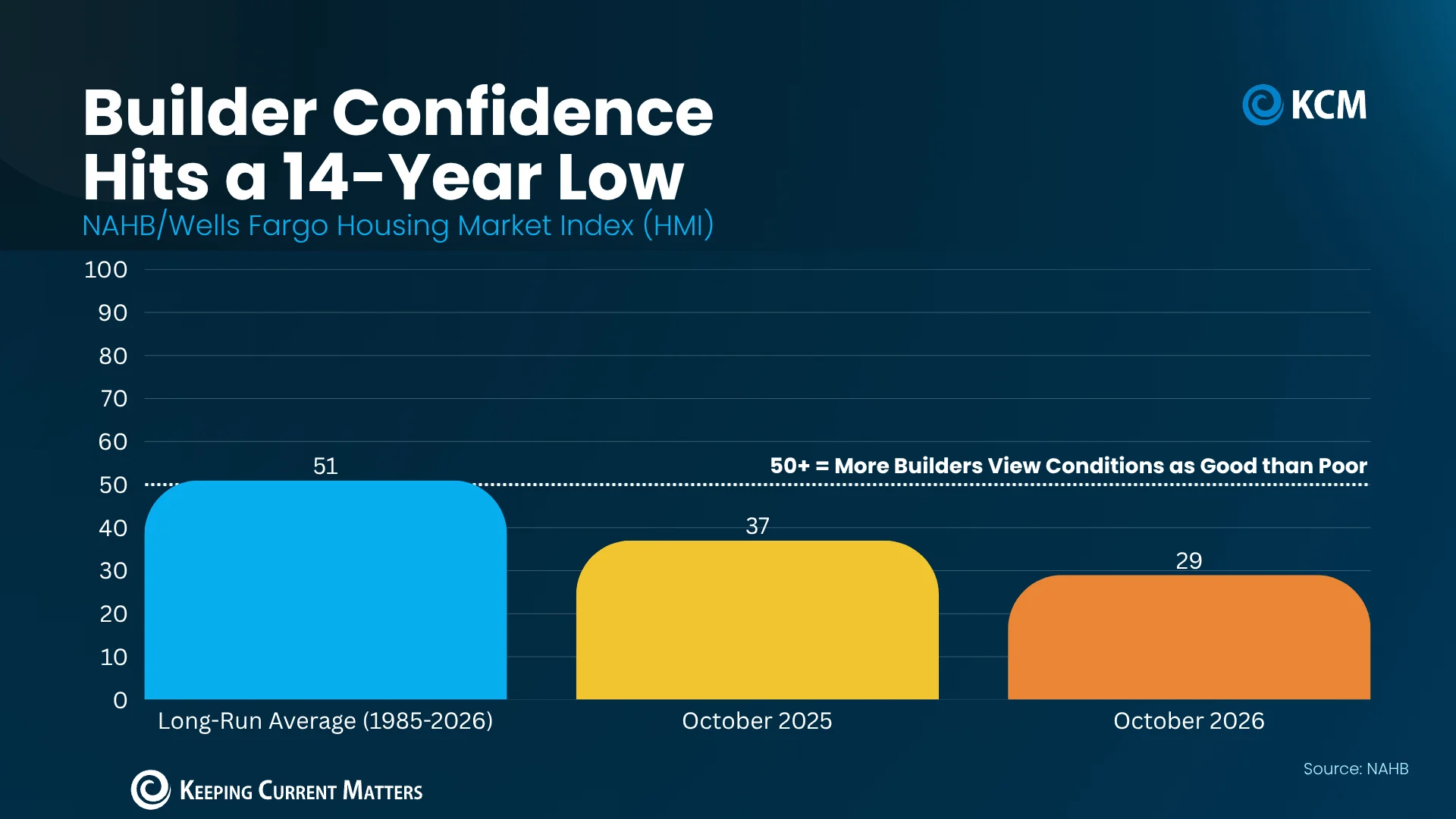
NAHB Chief Economist Robert Dietz described the pressures behind the weaker sentiment: “Demand persists, but higher mortgage rates, elevated construction costs and weaker consumer confidence are keeping more buyers on the sidelines.” The point is that demand hasn’t disappeared; it’s meeting affordability limits. A buyer may still want a new home but hesitate when the monthly cost is higher than expected or when confidence in the purchase is weak.
That combination matters for builders carrying completed inventory. A homeowner who receives an unsatisfactory offer can choose to wait, though waiting has its own costs. Builders have already committed capital to construction, and unsold finished homes continue to tie up money and incur costs. My read is that this can give some builders a stronger reason to negotiate than an individual homeowner may have. The pressure won’t be uniform, since a builder with few available homes may have less reason to make concessions than one with finished properties to sell.
Price cuts and incentives are already common
October’s NAHB survey shows builders are trying to draw buyers back. Some 65% offered sales incentives, while 43% cut prices—the highest share recorded from 2020 through 2026. Among builders making price reductions, the typical cut was 6%. These figures show that concessions are already part of the market, though they don’t establish what any particular buyer will be offered or whether the same terms apply across communities.
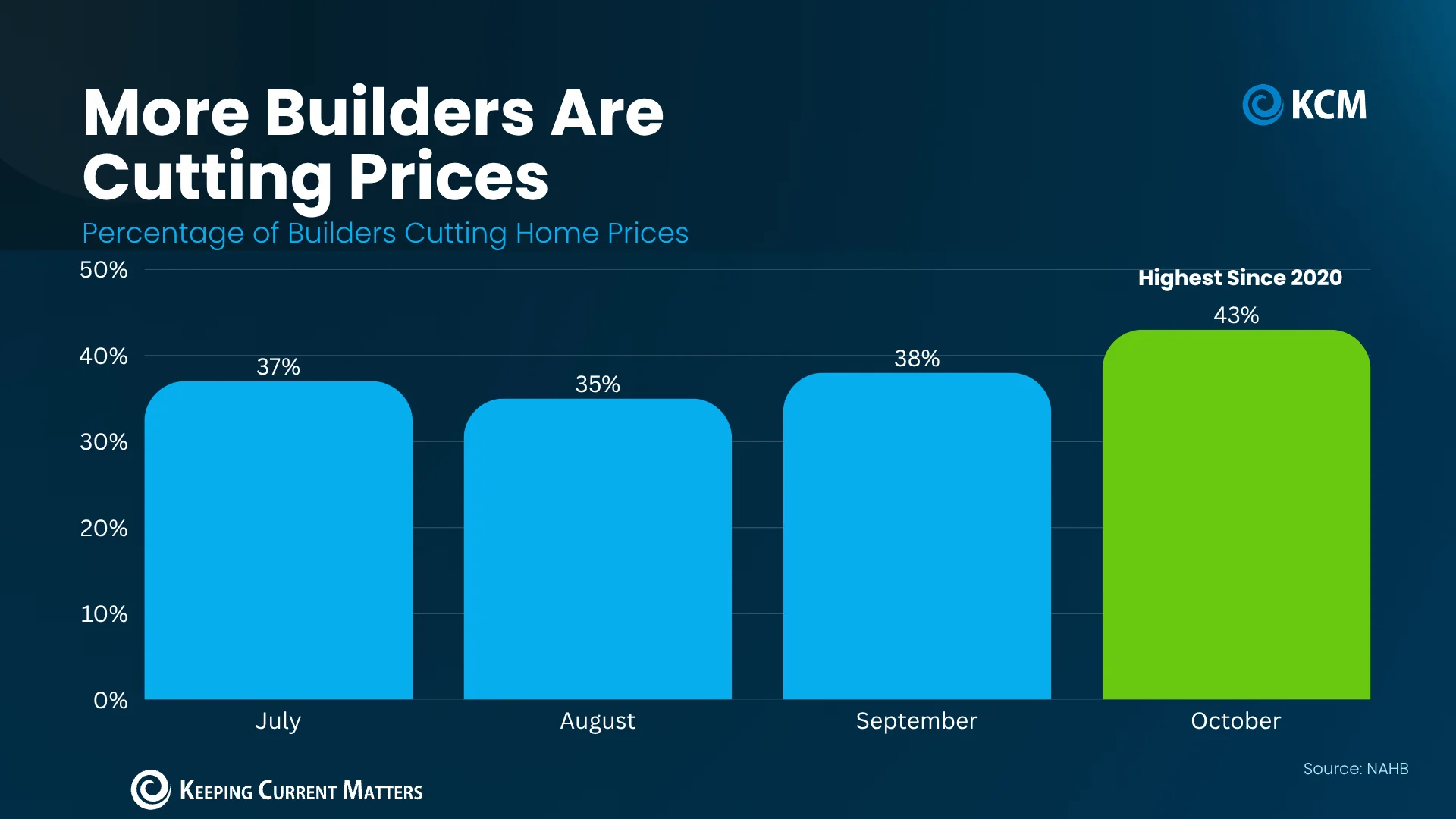
Negotiation doesn’t have to focus on the headline price. Buyers might ask about a mortgage-rate buydown, help with closing costs or upgrades that would otherwise add to the purchase price. The mix will vary: one builder may have room to adjust financing incentives, while another may be more open to a direct price reduction. If you’re comparing offers, look at the cost and terms of the full package, since a lower price and a financing concession affect the purchase in different ways.
Here’s the thing: inventory can affect a builder’s willingness to deal. Buyers should look beyond new releases and model homes to completed properties that haven’t sold. Often called quick move-in or spec homes, these houses are already built, so the buyer can consider the actual finished home rather than relying only on plans or a model. A longer time on the market may give the builder more reason to consider an offer that clears the inventory. A finished home, sitting unsold.
That said, a listed incentive isn’t automatically the best fit for a buyer. Its value depends on the buyer’s priorities and the details of the offer, including which features are included and what costs remain. Ask the builder to explain the available options in concrete terms, and compare them with the home’s price and your expected financing costs. The numbers here are underwhelming as a promise of savings: they describe broad survey results, not a guaranteed deal at a specific address.
Local inventory shapes the opportunity
National figures establish the direction of the market, but they don’t show how flexible a particular builder will be. Available homes and incentives can differ from one community to the next, and advertised terms may not capture every option. Even within one development, a completed home and a future release may be treated differently because the builder’s immediate inventory needs can vary.
A local agent can compare builder offers, identify communities with more completed homes and help buyers assess where discussions may be productive. Ask specifically what’s negotiable, including the price, financing terms, closing costs and included features. Some builders may prefer to preserve the sale price while offering other concessions. That can make the offer look different from a straightforward price cut, so buyers should ask what each concession changes in practice.
It also helps to compare the home itself with the offer attached to it. A finished property gives buyers a chance to assess its layout, finishes and condition, while advertised incentives may apply only to certain homes or terms. Buyers can ask which properties qualify, whether upgrades are included and how long an offer is available. Clear answers make it easier to compare communities without assuming that a headline promotion tells the whole story.
What the slowdown could mean for buyers
For buyers weighing new construction, the current slowdown makes completed inventory worth a closer look. This is more significant than it looks: a buyer’s negotiating room may come from the specific home a builder needs to sell, rather than from a broad change in national prices. If you’re working in this space, separating the national trend from the inventory at each community can make the conversation more useful.
The practical next step is to compare local options and ask what a builder will offer to sell a finished home. The October data gives buyers a reason to ask, but local availability and the terms attached to each property will determine what’s actually on the table. A direct question about price, financing, closing costs and included features can reveal whether the builder’s offer addresses the buyer’s real costs.