Why adjustable-rate mortgages are back in the conversation
Lower initial payments are bringing adjustable-rate mortgages back into more buyers’ conversations. In September, ARM rates were more than a percentage point below fixed-rate loans, according to Bankrate. On a median-priced home, that gap could mean $150 to $300 less per month, making the option relevant for buyers squeezed by mortgage rates. The difference is meaningful at the start of a loan, when buyers are already balancing the mortgage against other housing costs. But an introductory payment doesn’t show what the loan will cost over time.
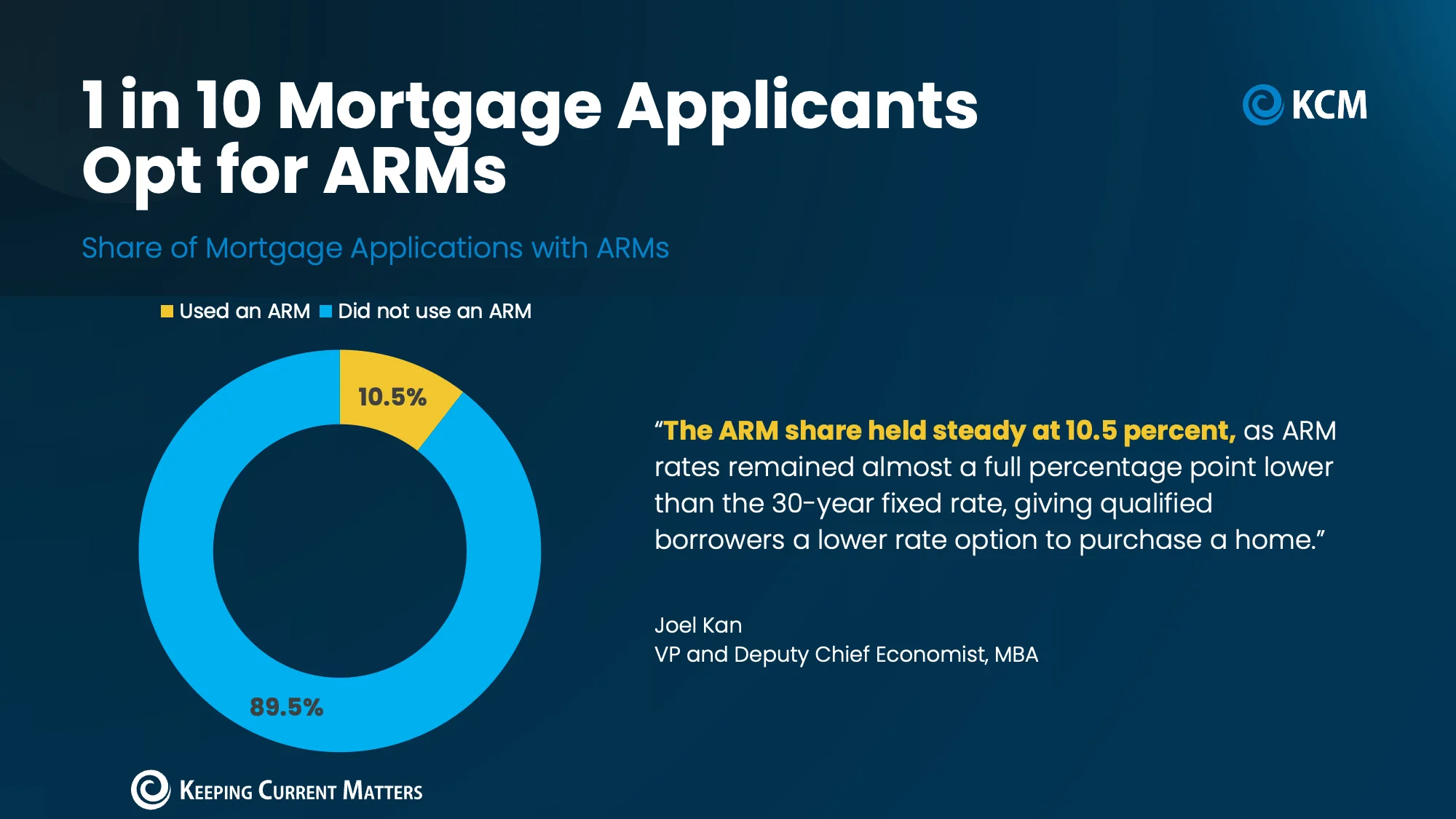
The Mortgage Bankers Association’s October data shows the shift in applications: roughly one in 10 applicants chose an ARM. That’s a notable share for a loan type whose appeal rests on a lower starting rate and whose trade-off is a payment that can change later. The figure suggests more borrowers are considering that trade-off, though it doesn’t tell us why each applicant chose an ARM or whether those applications will become completed loans.
How the rate changes
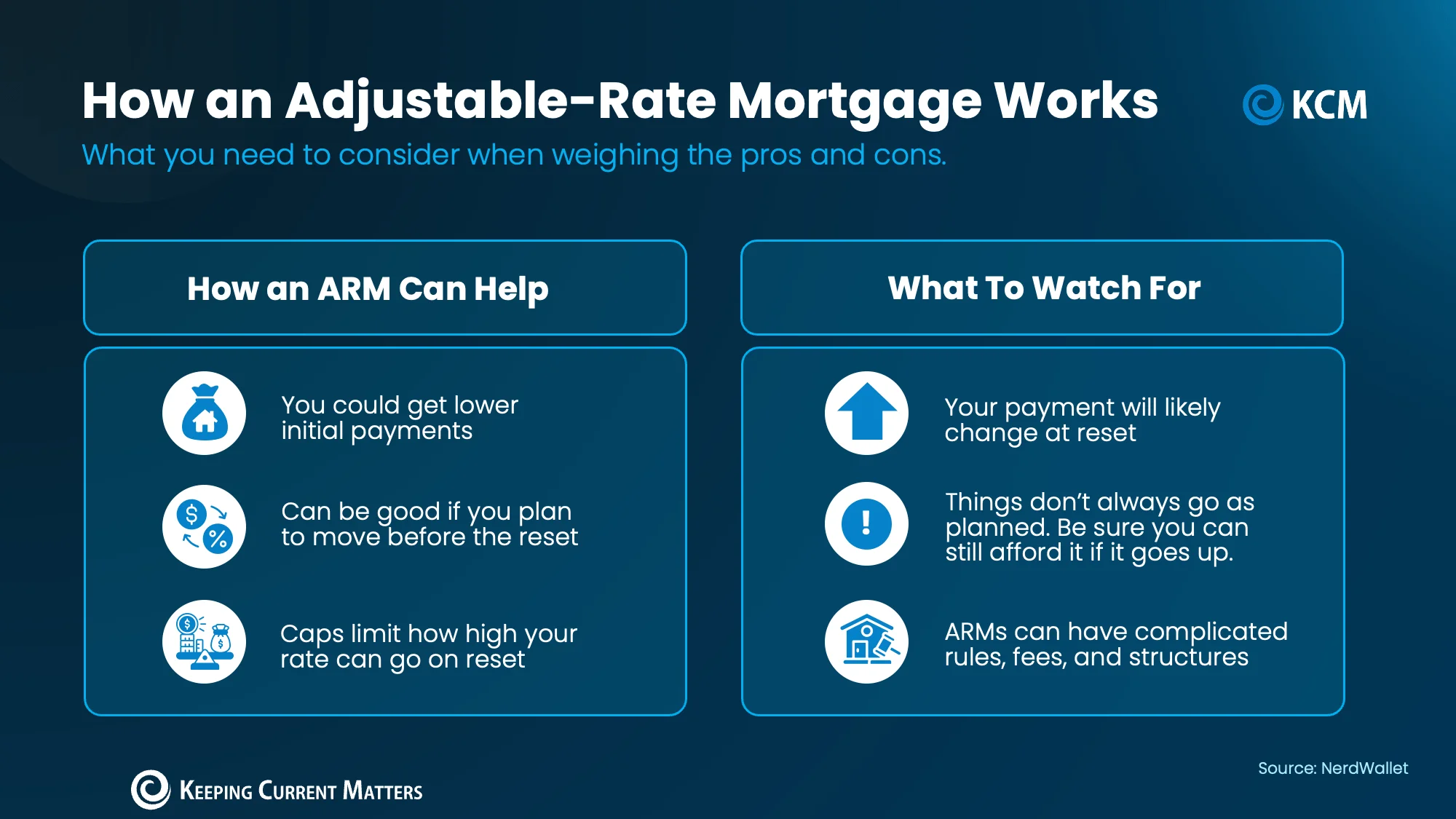
A fixed-rate mortgage keeps the same interest rate for the life of the loan. An ARM starts with a rate fixed for a set period, then adjusts according to market conditions. That initial period can make the monthly cost more manageable, but the later adjustment adds uncertainty. The borrower gets a defined stretch of payment stability, followed by a rate that can move under the loan’s terms.
The 5/1 ARM is one common structure. Its rate stays fixed for five years, then can reset once a year. When a reset occurs, the monthly payment may rise or fall. Most ARMs have caps that limit how much the rate can increase at each adjustment and over the loan’s lifetime, but buyers still need to understand how those limits affect possible payments. A cap sets a boundary; it doesn’t guarantee that the payment will stay near its introductory level.
For some households, the initial savings may make a purchase workable today. Others may prefer the certainty of a fixed payment. The right comparison depends on the loan terms and on how long the buyer expects to keep the mortgage. That expected timeline deserves a careful look: plans can change, and a borrower who expects to sell or refinance may still need to manage the loan if that plan doesn’t work out.
Run the numbers beyond the introductory rate
Before choosing an ARM, buyers should ask their loan officer to model a range of outcomes, including payments after each potential reset. The lower starting payment is only one part of the cost picture; the future payment and the loan’s adjustment caps matter too. Ask what the payment could look like under the loan’s terms if rates rise, and how much room the caps leave before the lifetime limit is reached. A useful comparison puts those scenarios beside the fixed-rate option, so the initial savings don’t dominate the discussion.
At the reset, borrowers can keep the loan if the revised payment fits their budget, refinance into a fixed-rate mortgage, or take out another ARM with a new fixed period. Selling the home is another option. Borrowers facing difficulty can also contact their loan servicer to discuss assistance or a modification. Those are possible paths, not automatic exits; each depends on the borrower’s circumstances and the choices available at the time.
Refinancing requires qualifying for a new loan, even when the borrower already owns the home. Credit, debt, employment changes and large purchases can affect that process, so buyers considering an ARM should ask their lender how those factors could shape future eligibility. If you’re working in this space, the practical question is whether the borrower could handle the payment if refinancing or selling isn’t available when expected. (And this is the part most people overlook.) Planning around a future loan approval leaves a gap between an attractive payment today and a financing option that still has to be earned later.
Today’s loan terms require a closer look
ARMs carry the memory of loans associated with the 2008 financial crisis, when some borrowers faced steep payment increases after very low introductory payments, and some loans were issued without verified income. Current lending rules require lenders to document a borrower’s ability to repay and consider the payment that could apply after the rate resets. That context matters, but it doesn’t answer whether a particular ARM is affordable for a particular household. The terms and the borrower’s budget still need to be examined directly.
That history makes it especially important to evaluate the specific loan in front of you. The market’s rate gap may help explain why ARMs are drawing more interest, but the payment after the introductory period is central to the decision. For buyers weighing affordability today against payment certainty later, a lender’s side-by-side scenarios can clarify the trade-off. This is more significant than it looks: a lower starting payment can change what seems attainable, while the later reset determines whether that budget still holds. The numbers here are underwhelming if they describe only the opening rate. The full schedule is what counts.
What the renewed interest means for buyers
The October application share and September rate gap point to renewed attention, but they don’t establish that ARMs are right for most buyers. A lower rate may ease the monthly payment at the outset; it also shifts some of the cost uncertainty into the future. That’s the central exchange. Buyers should judge it against their own expected time in the home, their capacity to absorb a higher payment and the specific caps and reset schedule in the loan documents.
For buyers who need the lower initial payment to make a purchase fit, that relief may be useful. It still needs to be weighed against what happens when the fixed period ends. A plain comparison of starting payments can make an ARM look straightforward. A comparison that includes later resets, refinancing eligibility and the possibility of staying in the home longer than planned gives a more realistic picture. No one can know every future move or market condition; the loan’s terms can at least show the range of payments the borrower may face.