Renting out a home can give an owner more time when a sale stalls, but that choice brings operating costs and day to day responsibilities. With about 9% of homes currently listed for rent having previously been offered for sale, the decision is showing up in rental markets as well as sales data, according to Parcl.
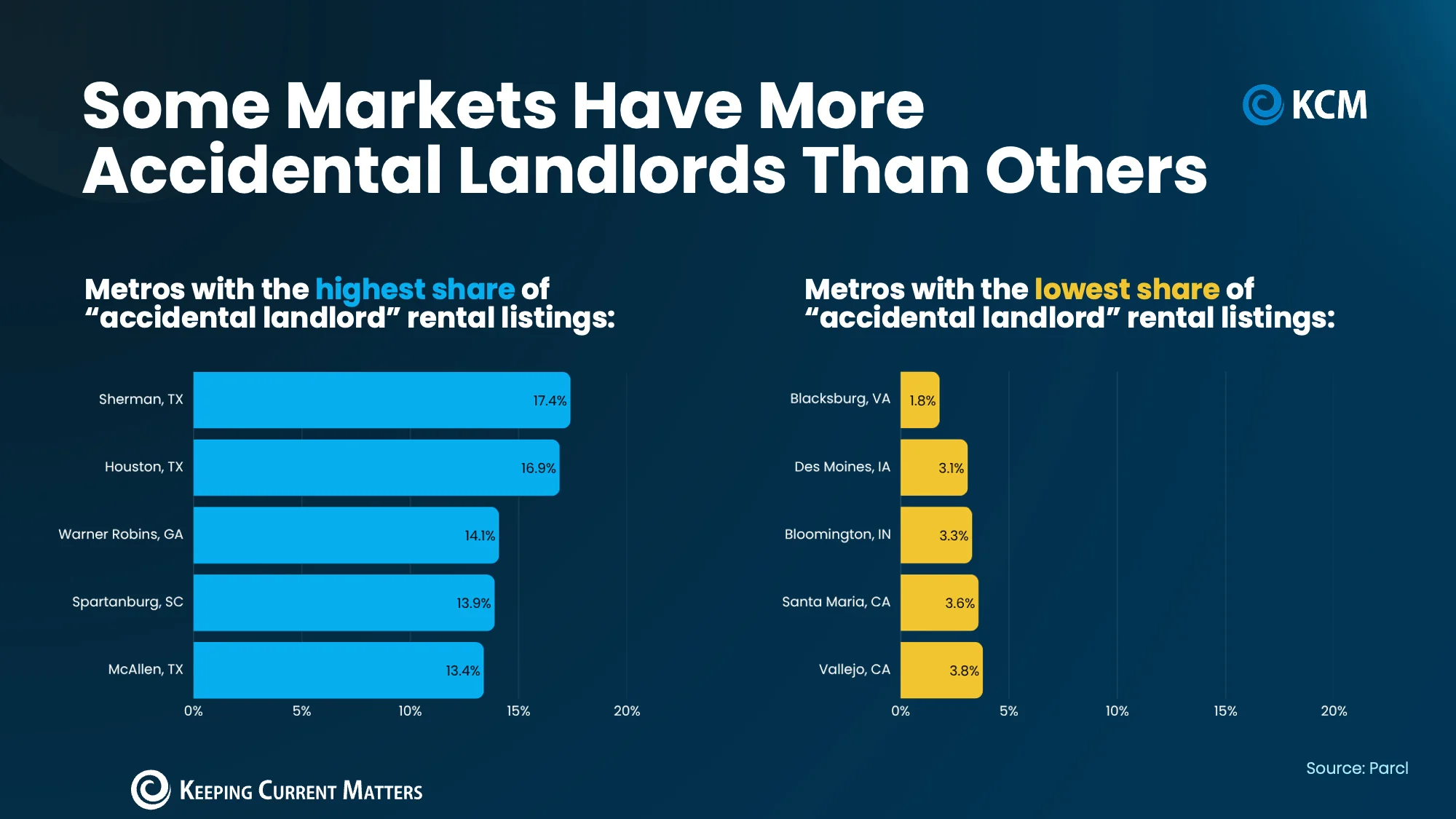
That figure doesn’t mean selling has stopped working. It does suggest some owners are reassessing after a slower sale or buyer resistance to their asking price. The local numbers matter: Parcl data puts these “accidental landlords” at around 17% of rental homes in Sherman and Houston, Texas, compared with less than 4% in Des Moines, Iowa, and Bloomington, Indiana.
Local sales conditions shape the choice
When homes take longer to sell and buyers gain bargaining power, renting can offer owners a way to wait instead of lowering their price quickly. Kara Ng, senior economist at Zillow, describes the pressure behind that decision:
“Bargaining power is tilting toward buyers and homes are taking longer to sell, making renting out a property one way to buy time rather than compete aggressively on price.”
Still, a home’s sale prospects depend in part on how it’s priced, prepared, and marketed for current buyers. The broader market picture is only a starting point; conditions can differ sharply from one city or neighborhood to another. Recent shifts among housing markets make local comparisons particularly relevant for owners weighing a change in plan. Market type, competing listings, and buyer response can all inform that assessment.
Owners considering a sale can also look at how sellers are adjusting prices in their area. A local agent can share how comparable homes are performing and help assess the options. That conversation should include what renting would require, not just what a sale might bring.
Rental income comes with a workload
Renting may look like a way to generate income while waiting for the right sale conditions, but owners take on the work of managing a property and tenants. Invest West Management points out that rental owners have obligations tied to their role, including registering tenancies, providing required disclosures, and meeting safety standards:
“Even if you never intended to become a landlord, the law still sees you as one — and you must meet all legal obligations that come with that role. This often includes registering the tenancy, providing tenants with certain disclosures, and ensuring the property meets safety standards.”
There’s also the practical work: following up on unpaid rent, arranging repairs, addressing damage between tenants, and responding to problems such as a leaking dishwasher or failed air conditioning. Unexpected maintenance can add to the time commitment and the cost.
Bankrate identifies several expenses owners should account for:
Landlord insurance, which typically costs about 25% more than a standard homeowners policy.
Property management fees, usually around 10% of rent if an owner hires a manager.
Vacancies, when the owner still pays the mortgage but receives no rent.
Make the decision with a local comparison
Renting can suit owners who are ready to manage the ongoing work and costs. For those who would rather sell, a slower market doesn’t automatically rule out a successful listing. A clear plan for pricing and marketing, set with an agent before launch, can help a property meet buyer expectations from the start.
The useful comparison is specific to the home and its market: likely sale conditions alongside expected rent, operating expenses, vacancy periods, and the owner’s capacity to manage the property. Those details can show whether renting is a workable choice or whether a better prepared sale deserves another look.