A dramatic listing with a demanding arrival
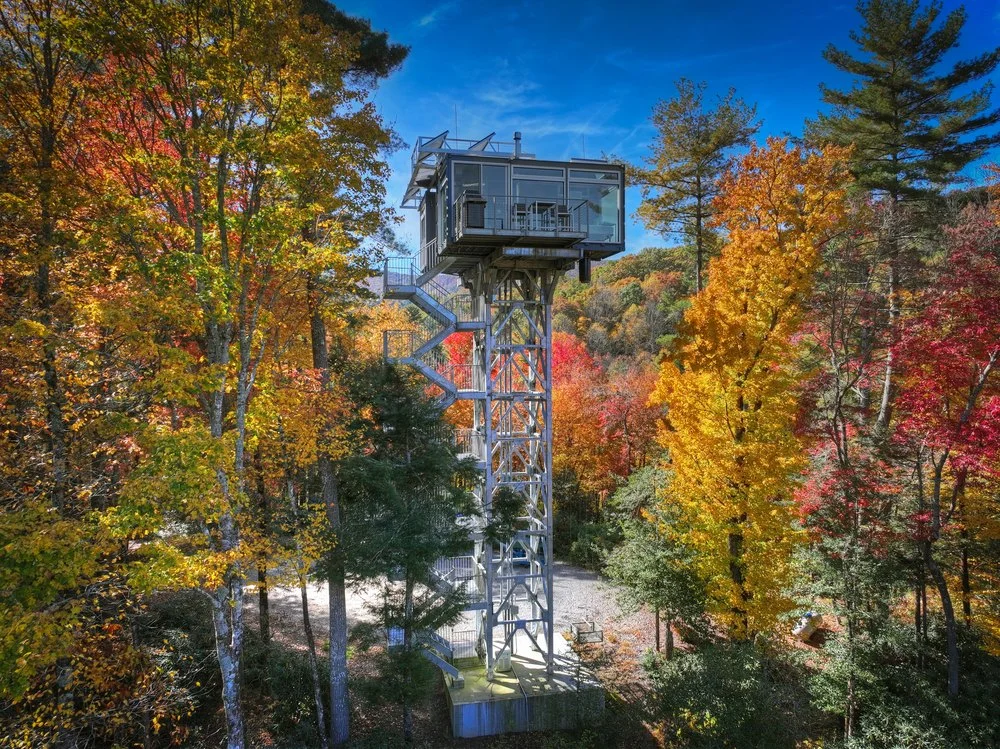
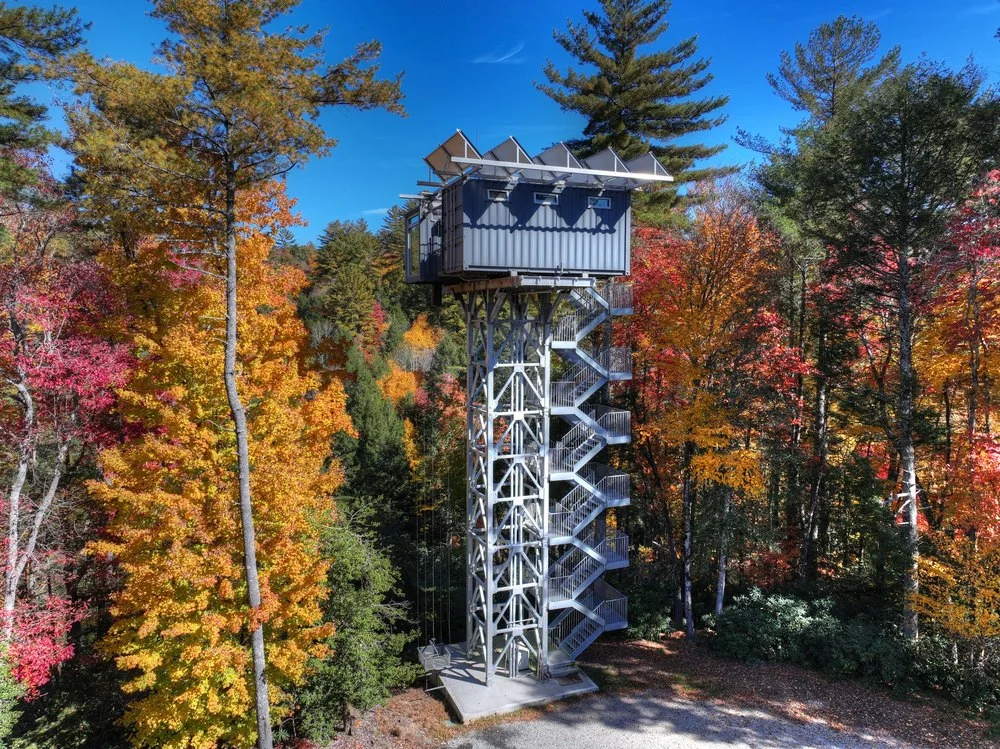
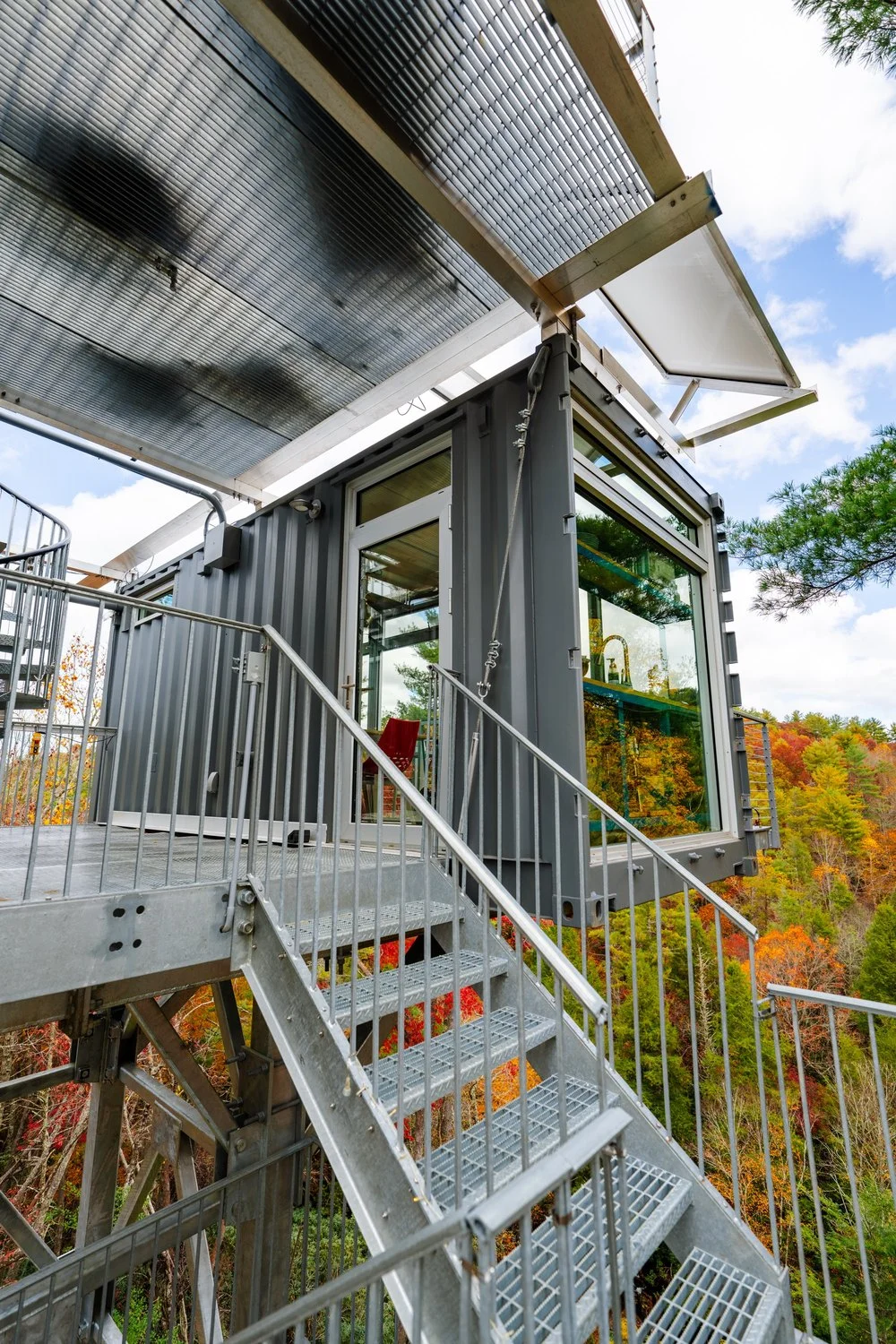
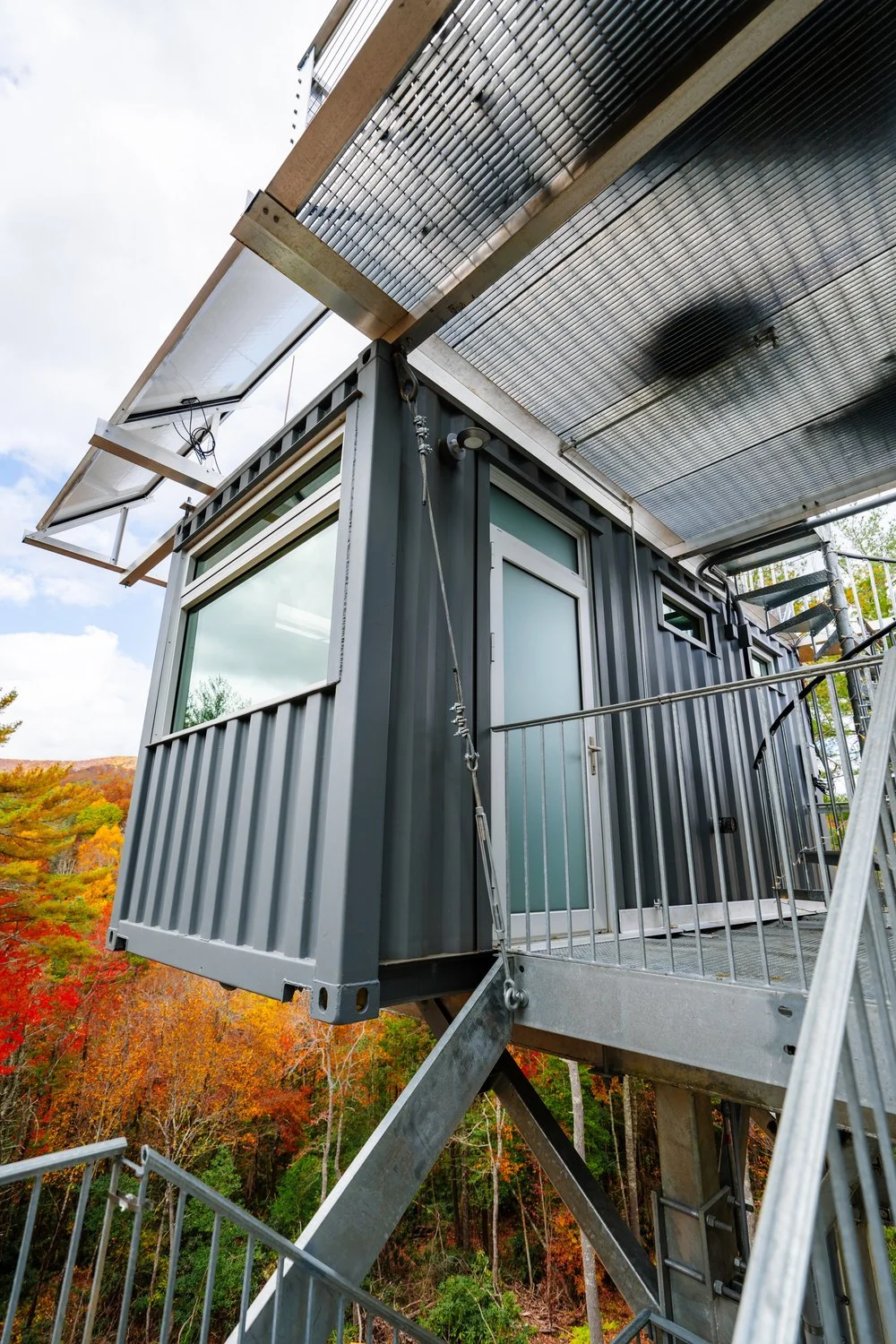
The defining feature of this $1.2 million Epworth, GA, listing is also its biggest practical hurdle: reaching the home means climbing 82 open steel stairs. At the top, two shipping containers form a compact retreat 60 feet above the ground, set on 14.31 acres beside the Chattahoochee National Forest. The property’s appeal rests on a sharp tradeoff: an unusual perch with sweeping views, paired with access and mobility demands that will rule out some visitors before they reach the front door.
Listing agent Logan Fitts of Mountain Sotheby's International Realty describes the structure as a commercial-grade steel watchtower adapted for residential leisure use. The property also includes about 3,000 feet of river frontage, waterfalls and stands of hemlock trees. Those natural features give the listing more than a singular architectural hook, though their value depends on how much a buyer wants a remote outdoor setting rather than conventional convenience.
Two containers above the tree line
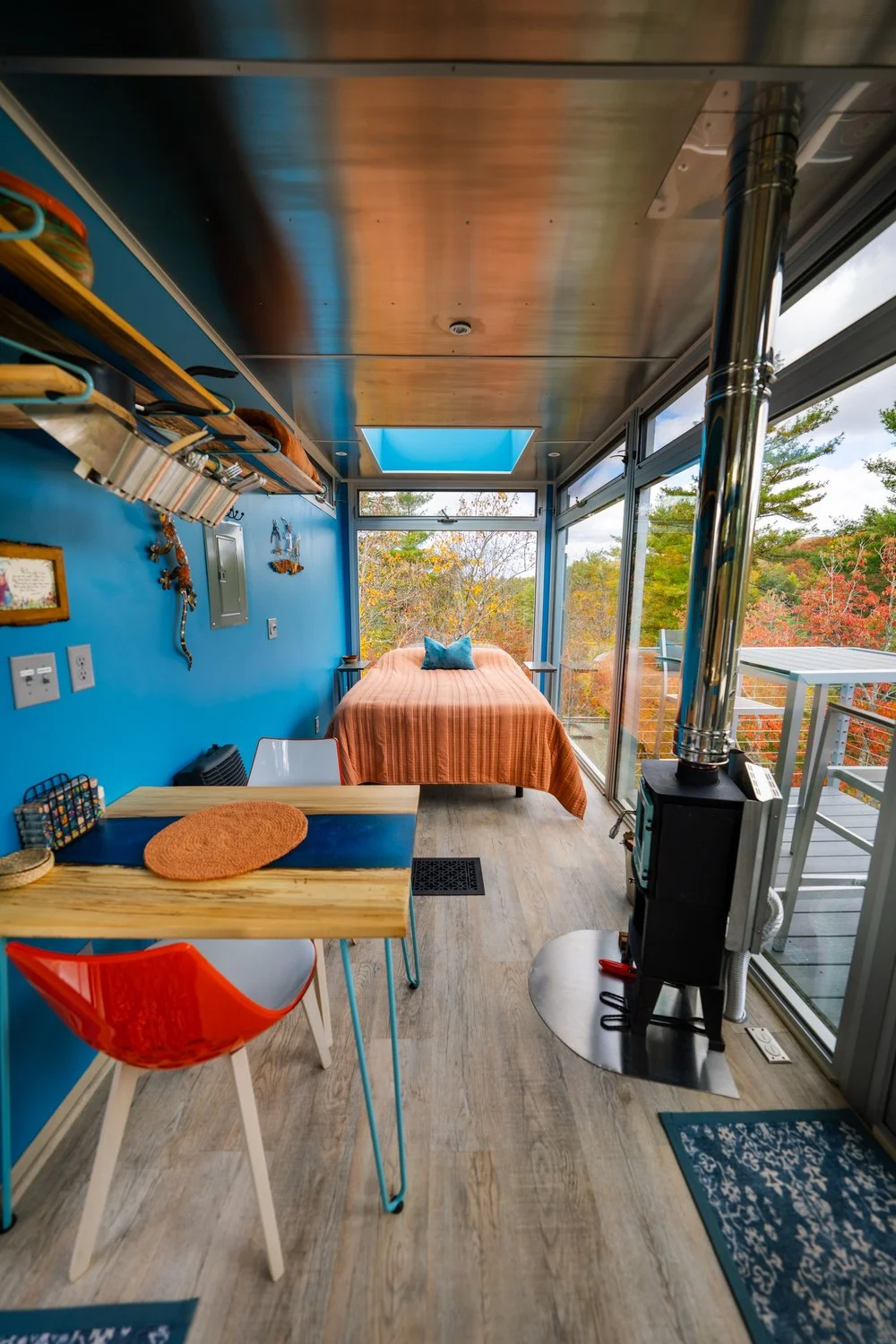
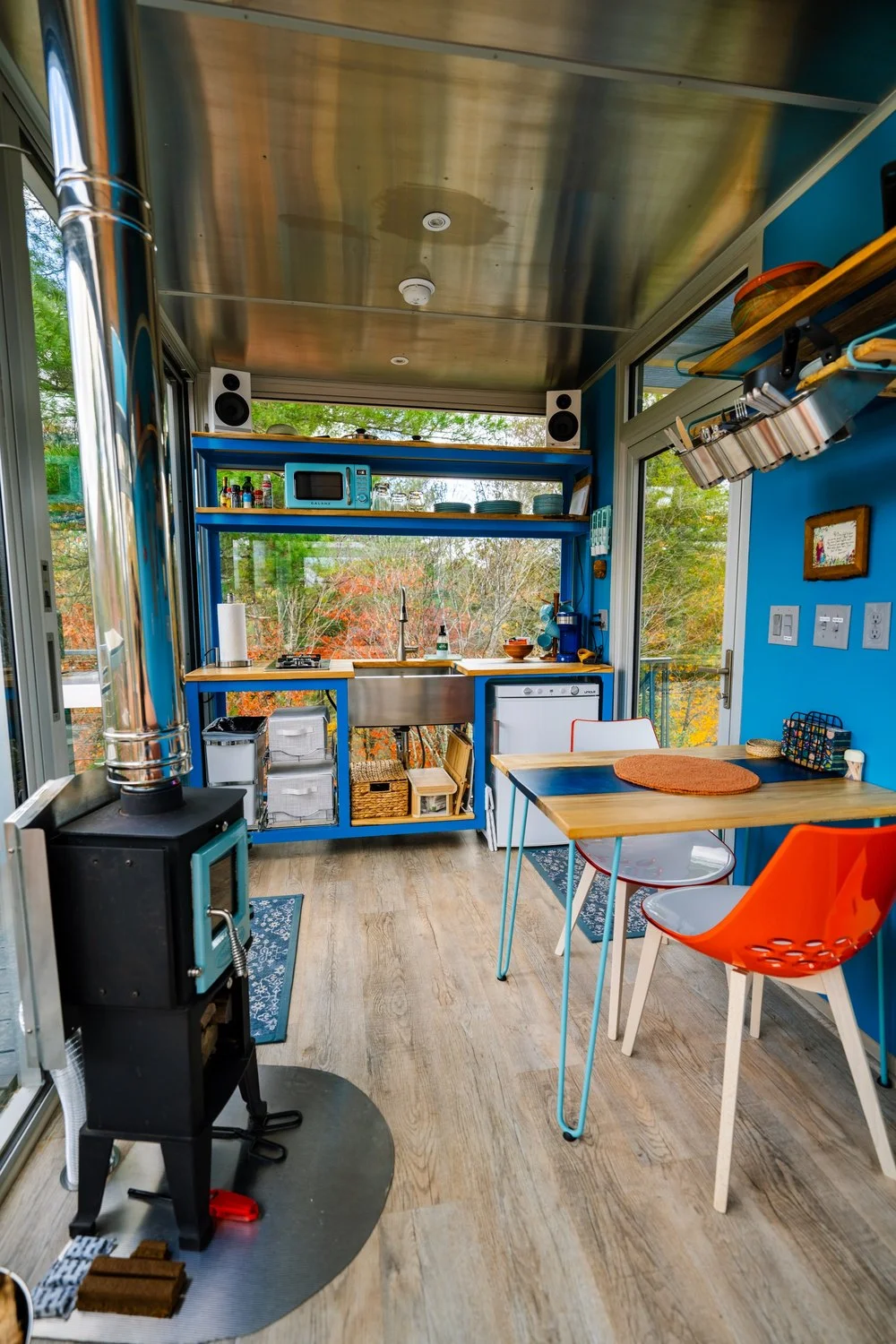
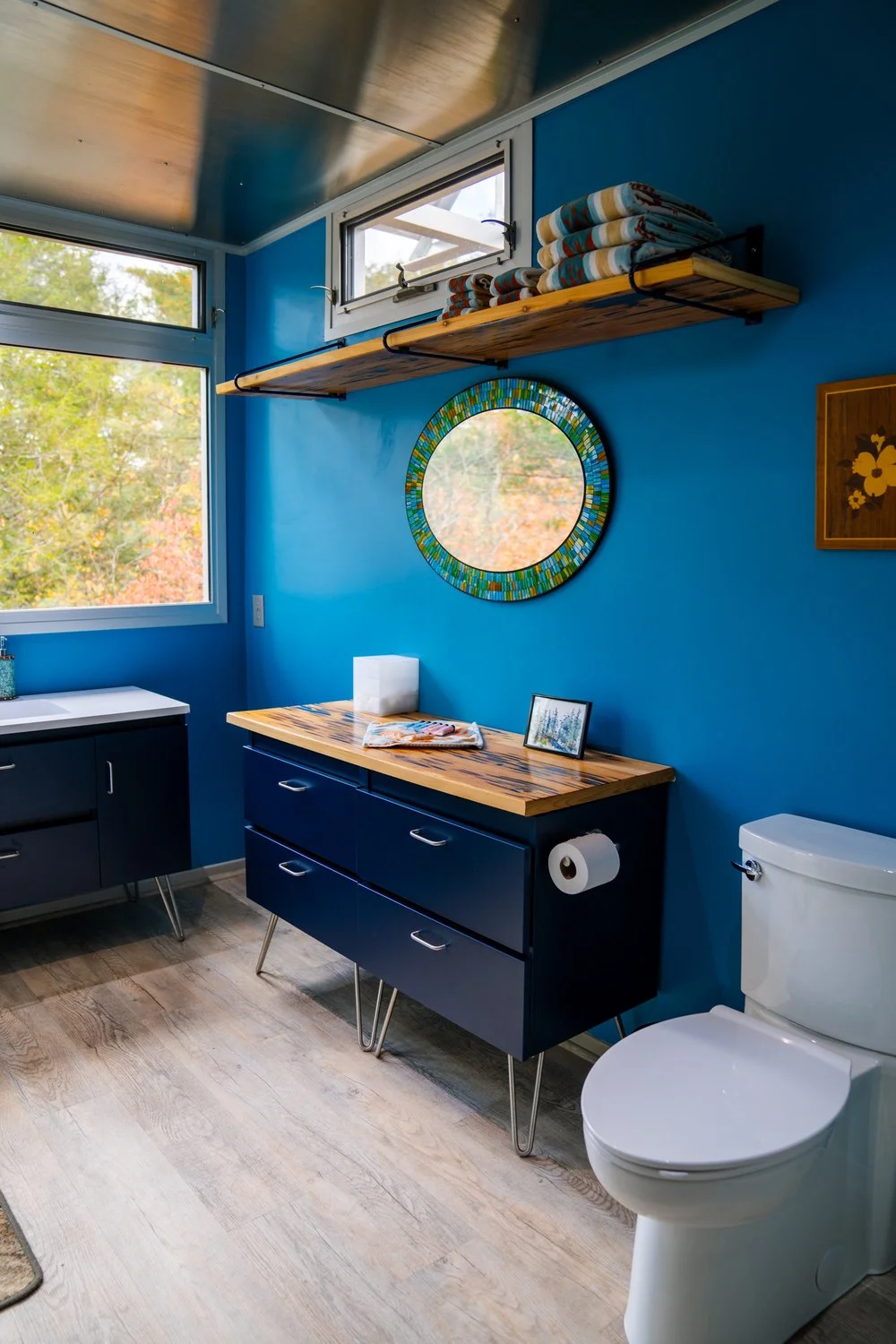
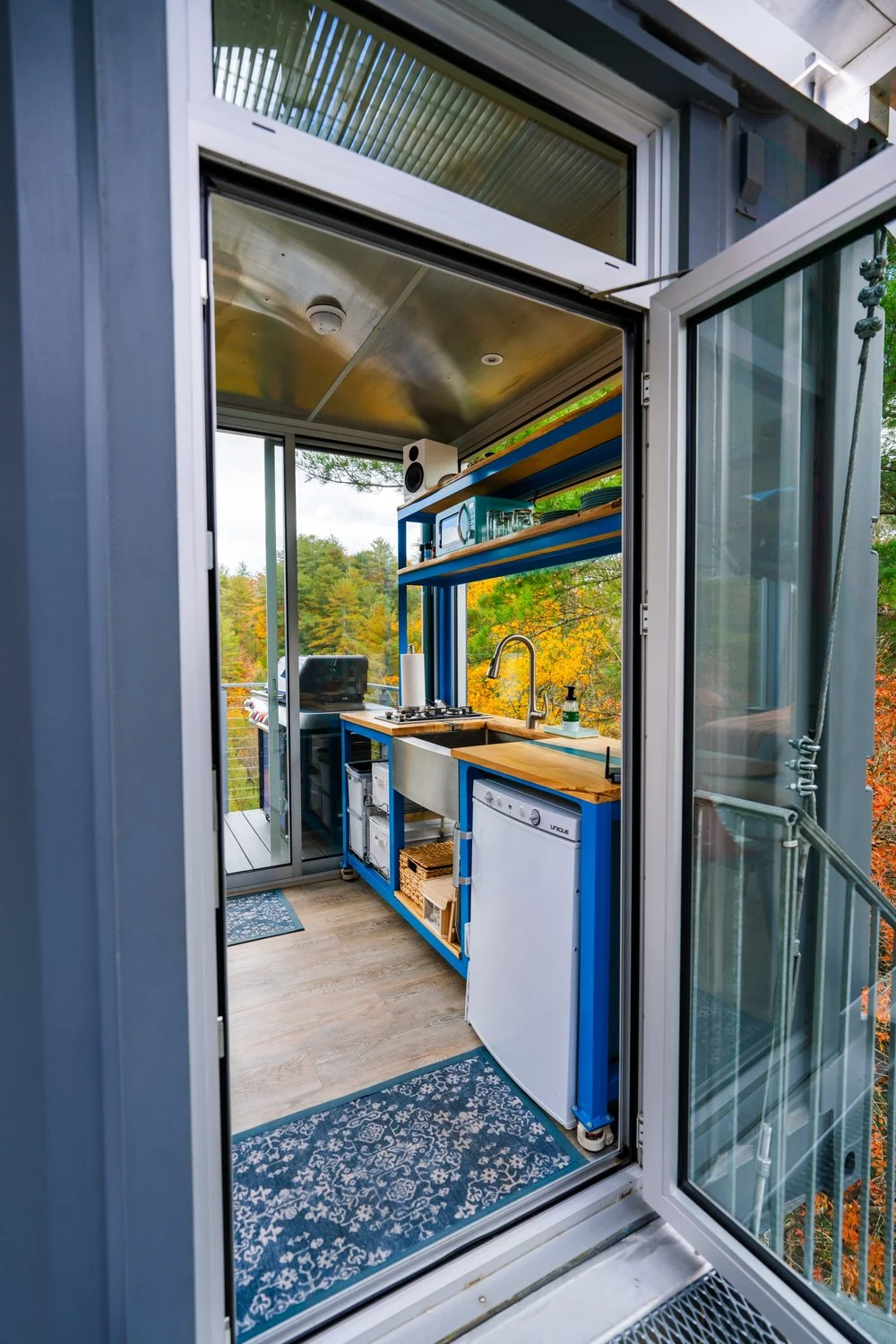
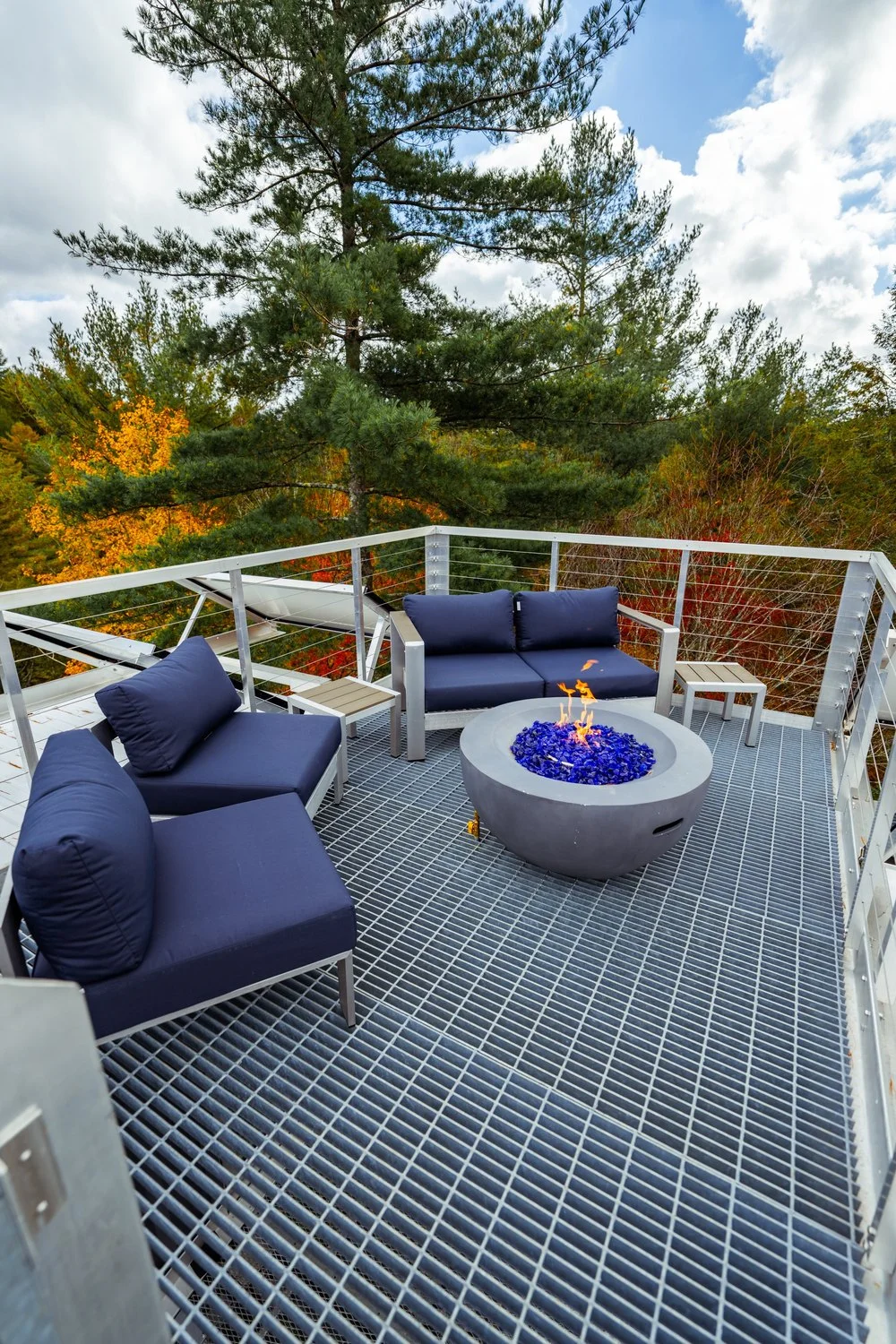
One container holds an efficiency-style bedroom with a bed, sitting area, stove and kitchenette. A landing connects it to the second container, which contains a full bathroom with a shower, toilet and double vanity. A spiral stairway continues up to a rooftop lounge and fire pit. The arrangement concentrates the essentials into a small footprint, while outdoor space and the view do much of the work that a larger conventional home might do indoors.
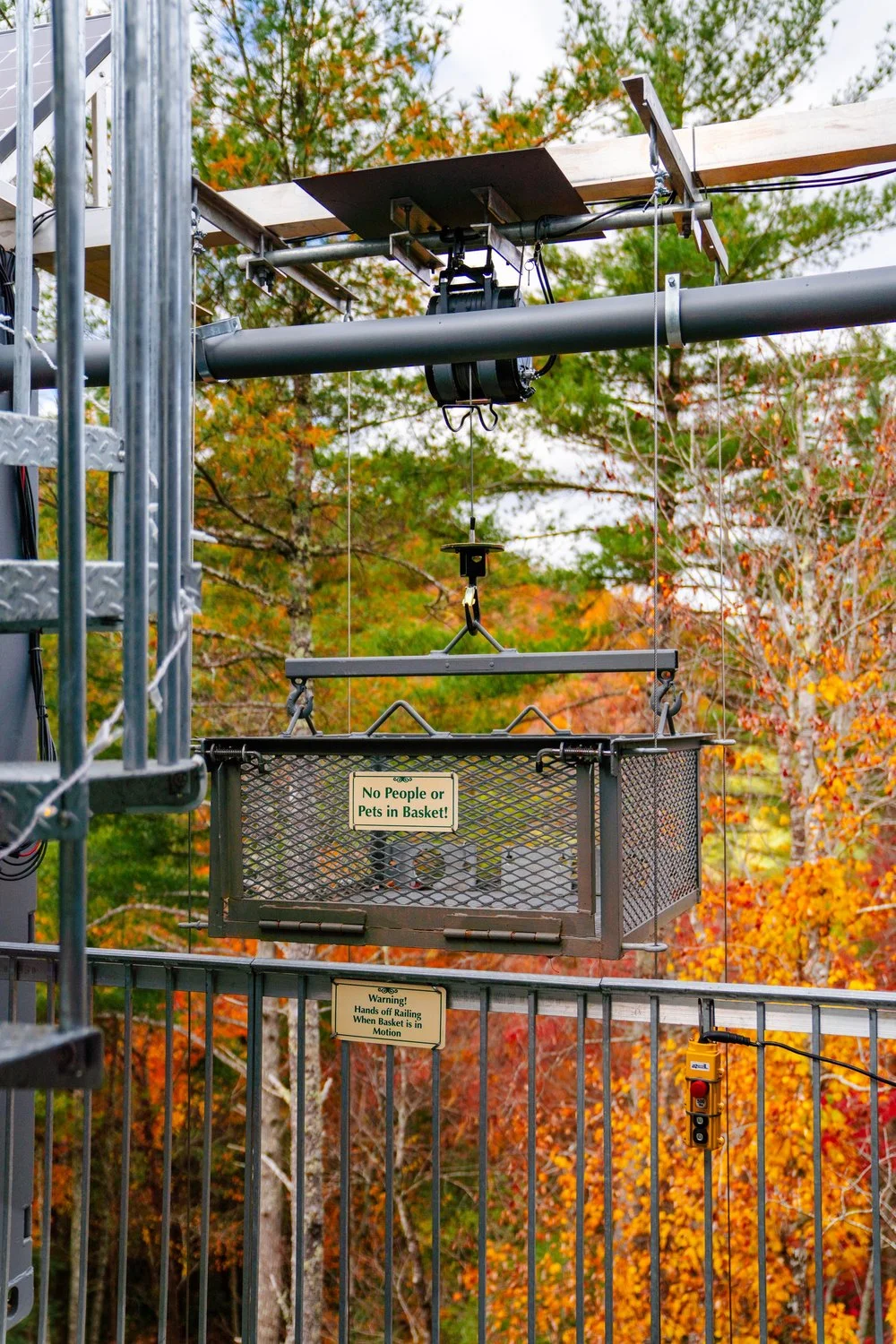
A lift handles luggage and packages, but not people. Getting to the living space requires climbing the 82 stairs, an ascent Fitts says felt intimidating on his first visit. The payoff is a panoramic view across the mountains and valley, with the river and a waterfall visible below. He likens the elevated home to “a glass birdhouse at the top of this mountain.” The image captures both the draw and the exposure: the home is designed to put its occupants above the surrounding terrain, and every trip up or down is part of the experience.
Remote access, established rental use
The approach is part of the property’s appeal and its operating reality. Gravel roads lead to the site, and visitors must cross the Jacks River by vehicle. Fitts says the crossing is shallow at the access point and should be manageable for a four-wheel-drive vehicle or one with adequate ground clearance. That’s a practical constraint for owners and guests alike: the route calls for advance thought about the vehicle, conditions and who will be making the trip.
The home runs off-grid on solar power, with a well, septic system and generator. Blue Ridge is about a 30-minute drive away, though Fitts says the property feels far more secluded once visitors arrive. These systems support a setting away from standard utility connections, but they also make the home’s infrastructure part of the ownership equation. If you're working in this space, the listing’s appeal is inseparable from its logistics: access, power and water aren’t background details here; they shape how the property can be used.
Rental income and the next owner’s choices
The current owner has held the land for about a decade and completed the tower home in 2023. It has since operated as a short-term rental, generating about $92,000 a year over a nine-month rental season. That history gives buyers a record of use, but the figure comes with a defined season and doesn’t, by itself, describe operating costs, occupancy patterns or the work required to manage a remote property.
Fitts says the owner hopes the next steward will value the setting and continue shaping the property around outdoor use. That’s a telling description of the listing’s character: it’s presented as a place whose purpose is tied to its land and experiences, rather than a conventional residence with a standard room count or easy daily access. The numbers here are underwhelming as a complete account of the business, but they do show that the home has been rented and has generated income during a nine-month season.
What the listing asks of a buyer
For buyers weighing the listing, the numbers tell only part of the story: the acreage and river access come with a distinctive elevated home, off-grid systems and an arrival that requires both suitable vehicle clearance and comfort with heights. The rental history may help explain how the property has been used, while the stairs, river crossing and compact interior define the practical limits. This is more significant than it looks. A buyer isn’t simply choosing a remote home; they’re choosing a specific way of arriving, living and hosting.
And this is the part most people overlook: the lift moves belongings, not people. Guests still need to manage the climb themselves, and the approach may narrow the audience for a rental even as the tower and mountain views make it memorable. A striking view. A demanding routine. That said, for someone who values seclusion and outdoor access, those same constraints may be part of what makes the property distinctive.