A 2027 listing date might feel distant, but the prep work for it is already on the clock. Buyers have more homes to compare against than they've had in years, and that changes how they judge what's in front of them. A house that looks ready on day one has a real edge over one that needs a last-minute scramble. If you're thinking about selling down the road, the time to decide what to fix is now, not the month you put a sign in the yard.
Here's the thing: waiting until next year to sell doesn't mean waiting until next year to start. The preparation itself eats up more time than most owners expect. Much of that time goes to decisions, quotes, and calendars rather than to the work itself. That's the part people underestimate. Starting early gives you room to make those calls without pressure.
How Much Lead Time Do You Need?
Zillow suggests giving yourself roughly two to three months to get a house ready to list. That window is less about the physical work and more about logistics: deciding what to fix, lining up contractors, working around their calendars, finishing the updates, and then scheduling photos and showings. Sellers clearly build in that runway. An estimated 78% completed at least one home improvement project before their house hit the market.
Treat that two-to-three-month figure as a rough guide, not a rule. A cosmetic refresh can wrap up in a few weekends if your contractors are responsive. A project that involves permits, special-order materials, or a backlog of trades can stretch well past that. If you're working on a tight timeline, the scheduling risk is usually bigger than the repair risk.
Don't read that 78% as a mandate for a gut renovation. Interior painting is the most common project, which tells you the work is often cosmetic rather than structural. That's good news if your budget is tight. It also means the bar for a "ready" home is lower than many owners assume. The graph below shows the rest of the list.
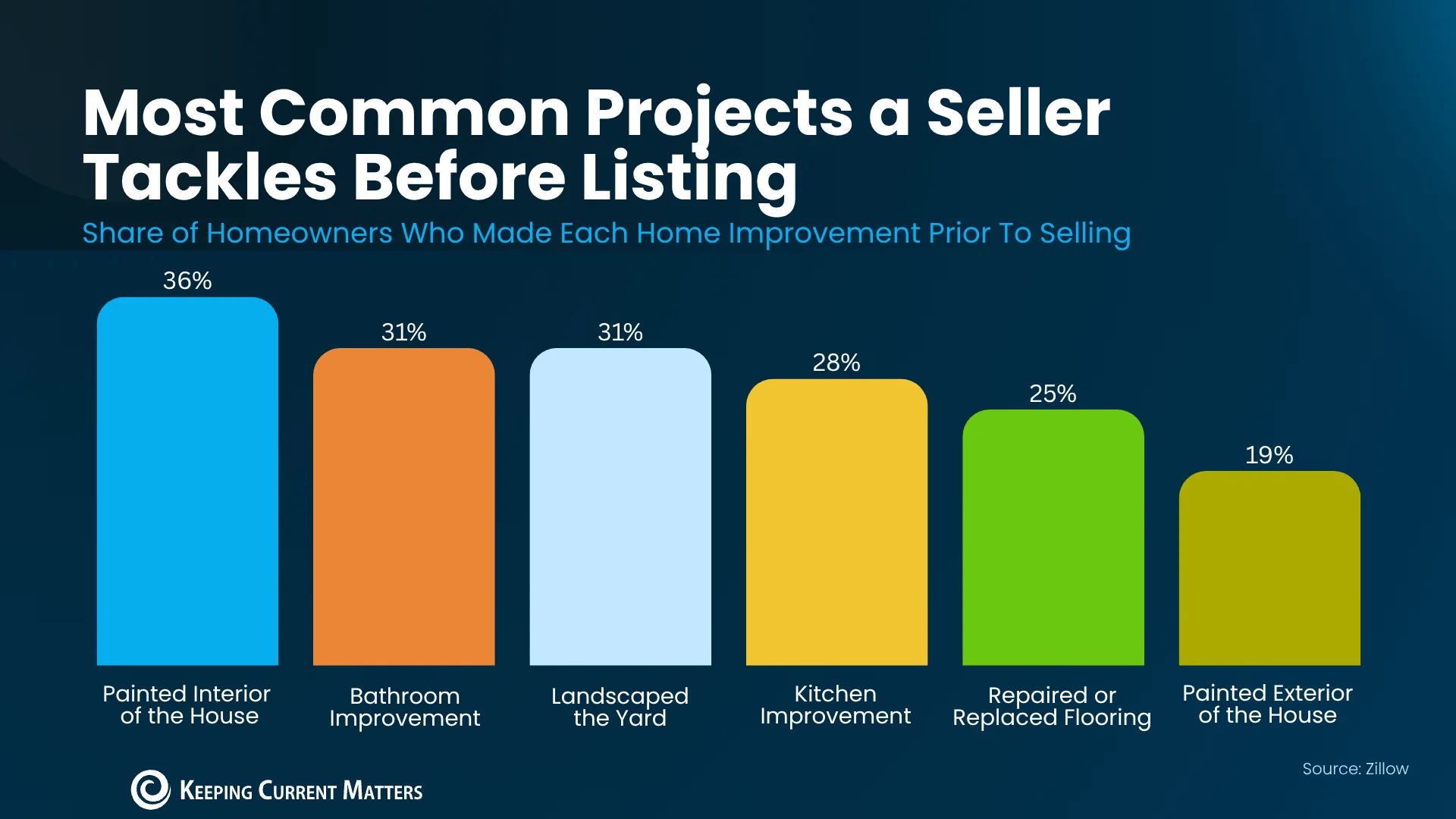
Most sellers won't need to touch everything on that chart, and some won't need to touch any of it. Whether you land in the first group or the last depends on the house, the neighborhood, and what recent comparable sales look like in your area. But most homes have at least one project worth scheduling now. Deciding early keeps your options open, even if you never end up doing the work.
Sequence the Work Before You Spend
Order matters more than most people expect. A common way to waste money is to start with the most visible project instead of the most useful one. Every room seems to need something, and the loudest problem tends to win the argument. A better approach is to sort the list first and spend second.
Talk to an agent first
A long list of things that "need updating" is easy to produce and expensive to act on. A local agent can sort that list against what buyers in your market are responding to and what comparable sellers are doing. The goal is to skip the updates that won't move the needle at sale.
That said, an agent's opinion is a starting point, not a verdict. Ask them which items they'd fix, which they'd leave alone, and why. Listen for specifics rather than general enthusiasm. An agent who wants your listing has a stake in what you spend, so it's reasonable to get a second opinion on the big-ticket items before you commit.
Get a pre-listing inspection
Think of a pre-listing inspection as a preview of what a buyer's inspector will flag later. Buyers are pickier now that they have more choices, and a problem that surfaces mid-sale gives them leverage. That aging HVAC system you've been nursing through one more season is a good example. Deal with it while you still control the schedule.
Here's where I'd push back on a common assumption: an inspection only helps if you act on it. A report sitting in a drawer doesn't improve your position. The value comes from deciding, item by item, what to repair, what to replace, and what to price in. Those choices are much easier to make calmly than under a deadline.
Angi puts the typical cost of a pre-listing inspection at $300-600, which is modest next to the cost of a surprise during the sale. The National Association of Realtors (NAR) makes the same practical point:
“An inspector will be able to give you a good indication of the trouble areas that will stand out to potential buyers, and you’ll be able to make repairs before open houses begin.”
The real advantage is timing. You can space out repairs on your own schedule instead of cramming them into the weeks before listing. That matters more than the inspection fee itself, because rushed work tends to cost more and show up in the final result. It also gives you a clearer picture of which problems are worth fixing and which ones are better disclosed and priced in.
Hold the finishing work for later
Not everything belongs on the early list. Deep cleaning, staging, touch-up paint, and landscaping work best closer to listing day, when they'll still look fresh in photos and walkthroughs. Doing them too early means paying twice, once for the work and again for the wear and tear that follows.
Decluttering is the exception. Start with the closets, garage, or storage room you've been avoiding. Future you will appreciate having fewer boxes to pack. Clearing space early also makes it easier to see what the house actually looks like, which is harder to judge when every corner is stacked with old paperwork.
Redfin frames the payoff this way, and it's a fair summary of what buyers respond to in photos and walkthroughs:
“Smart preparation leads to a smoother sale, stronger offers, and fewer surprises during closing. Homes that are clean, well-staged, priced right, and professionally photographed tend to sell quickly.”
What This Means for You
If you're planning to sell in 2027, the practical takeaway is simple: the work you do now buys you flexibility later. You can wait for a better moment, adjust your price, or walk away from an offer that doesn't fit. Owners who start late have fewer of those options, because every decision gets compressed into a shorter window.
I can't tell you what the market will look like when you list, and nobody reliable can. That's exactly why preparation matters. Buyers' expectations and the number of competing homes can shift, and a house that's already in good shape handles those shifts better than one that's still under construction.
If you're working in this space as an agent or adviser, the same logic applies to your clients. Walk them through the list early, separate cosmetic items from real problems, and be candid about what won't pay off. Clients who hear that from you in the spring won't thank you for it in the fall, but they'll trust you more.
This is more significant than it looks. Most of the advice here comes down to sequencing, not spending. The sellers who do best usually aren't the ones with the biggest budgets. They're the ones who started asking questions while there was still time to act on the answers.
The Bottom Line
You don't need to renovate the whole house or start packing your life this year. You do need a plan. That plan doesn't have to be elaborate. A list of what matters, a rough schedule, and a few conversations with people who know your local market will get you most of the way there.
The earlier you map out the work, the more choices you keep. That means less rushing, fewer surprises, and a stronger first impression when the listing goes live. Not a bad trade for a few months of planning.