Why the two rarely arrive together
Rates above 7% have many buyers sitting on the sidelines, waiting for relief that forecasters don't expect soon. Focusing only on the rate misses the bigger shift. Buyers rarely get a low rate and strong negotiating power at the same time, and right now the second one is more available than it has been in years.
That's not how most coverage frames this market. The monthly payment gets all the attention, and it's easy to see why. But the payment is only one line in a deal, and the terms around it can move just as much. If you're shopping for a home right now, that's worth keeping in mind.
Think back to 2020 and 2021. Mortgage rates sat near 3%, and buyers piled in. Those cheap loans came with a catch: plenty of competitors and too few homes. Multiple offers became normal, buyers paid over asking or waived inspections, and sellers set the terms.
Here's the part I find instructive. Cheap money didn't just make homes more affordable on paper. It pulled more buyers into a market that couldn't supply them, and that turned the process into a contest that rewarded speed over substance. Similar cycles tend to look like this. When financing gets easy and supply stays thin, sellers gain the upper hand, and the terms follow.
The scale of that imbalance is easy to underestimate. Jake Krimmel, Senior Economist at Realtor.com, puts it in stark terms:
"Seller's markets peaked at 98 of 100 metros in spring 2022 after two years of mortgage rates near 3%."
Ninety-eight out of 100 is about as lopsided as a market gets. Rates climbed in the second half of 2022. Buyer demand dropped, inventory built up, and the balance started sliding back toward buyers. Here's the thing: that slide has largely played out. In a recent report, Realtor.com found about two-thirds of the top 100 metros, or 66 of them, now lean toward buyers. The graph below breaks it down.
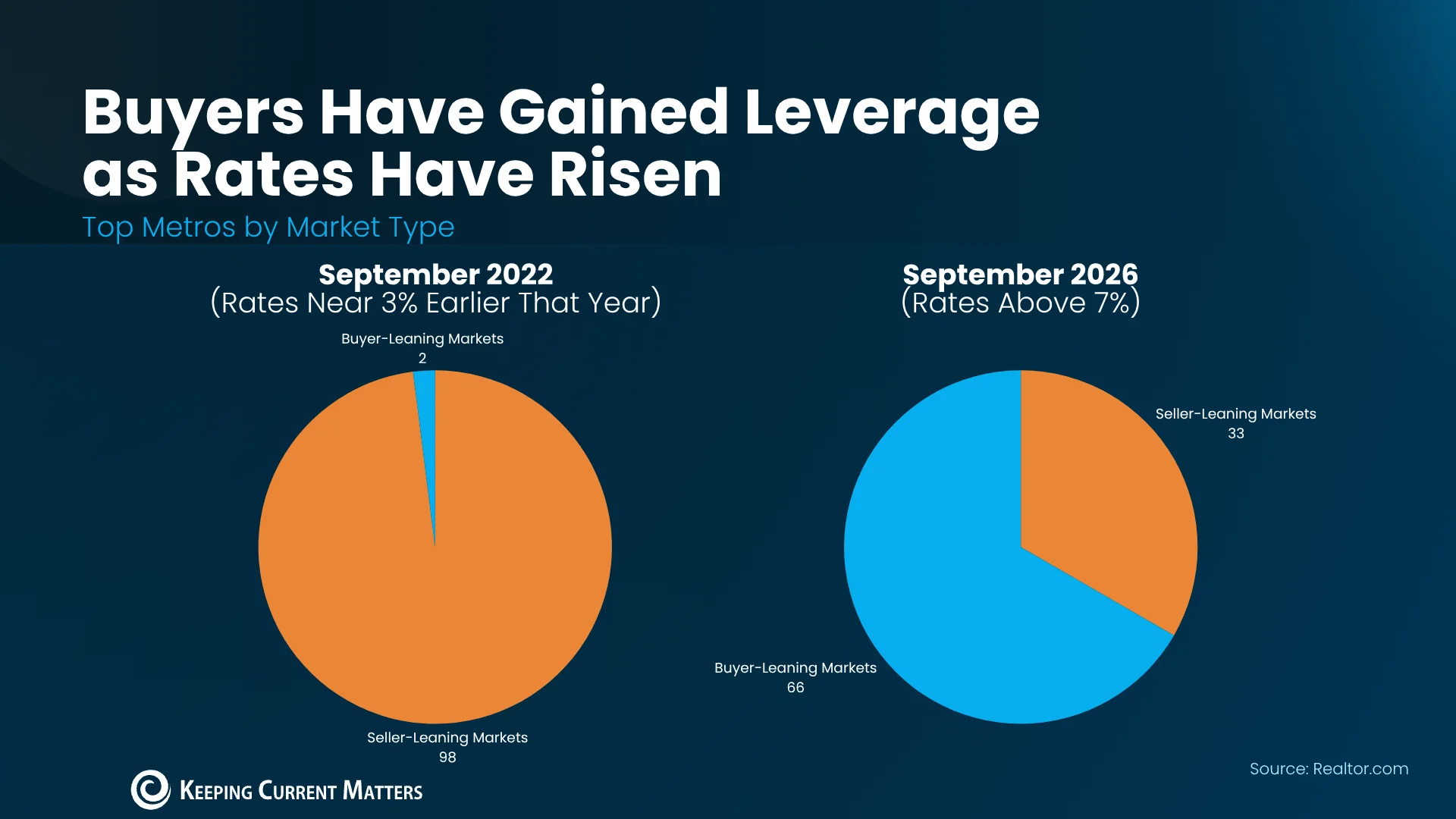
Two-thirds isn't a sweeping victory for buyers, though. It means roughly a third of the largest metros still favor sellers, and that split matters if you're deciding where to look. The shift is real but uneven. The gap between a balanced market and a buyer's market often decides whether you face a bidding war or a quiet negotiation.
Lower rates would obviously help, and nobody would turn them down. But the shift in power carries advantages that a rate cut wouldn't automatically restore. Buyers who wait for cheaper money often find the room they had has already closed. (and this is the part most people overlook) The seller who was firm last year may be the one offering concessions next year.
What the extra negotiating room looks like on the ground
There are more homes for sale than there have been in years, and that puts sellers under pressure. More listings mean each seller competes with more alternatives for the same buyer. Lawrence Yun, Chief Economist at the National Association of Realtors (NAR), says:
"Higher inventory and lengthening days on market give buyers improved negotiating power."
That shows up in actual deals. According to Redfin, nearly half of buyers now receive some kind of concession from the seller. That can mean help with closing costs, money toward repairs, or the seller paying to buy down the mortgage rate. The graph below shows how those concessions break down.
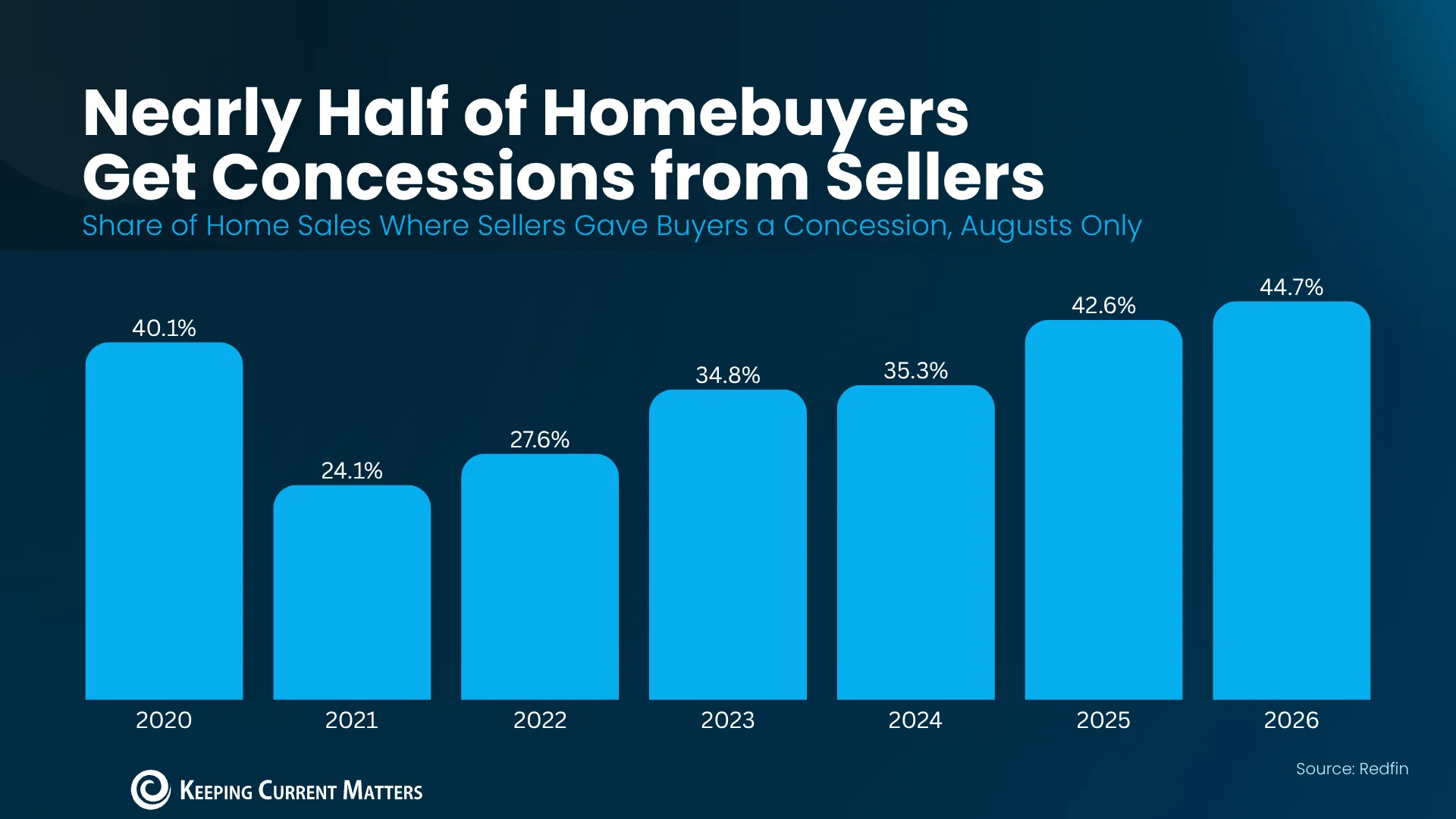
Concessions are a useful signal. They show a seller who is negotiating, not just listing. The mix of help you can get typically depends on how long a property has been sitting and how motivated the seller is, so expect it to vary from one house to the next.
So if you find a home you like but the rate isn't what you hoped for, you still have room to maneuver. Ask about a price cut or a seller-paid rate buydown. Not every seller will say yes. But often enough, it's worth the ask. Compare the two carefully, because a price cut and a buydown affect your monthly payment and your long-term costs in different ways.
Why waiting for lower rates carries its own risk
Holding off until rates drop sounds sensible, but the forecasts offer little comfort. Fannie Mae, the Mortgage Bankers Association (MBA), and Wells Fargo don't expect rates to fall much through 2027. The graph below shows their outlooks.
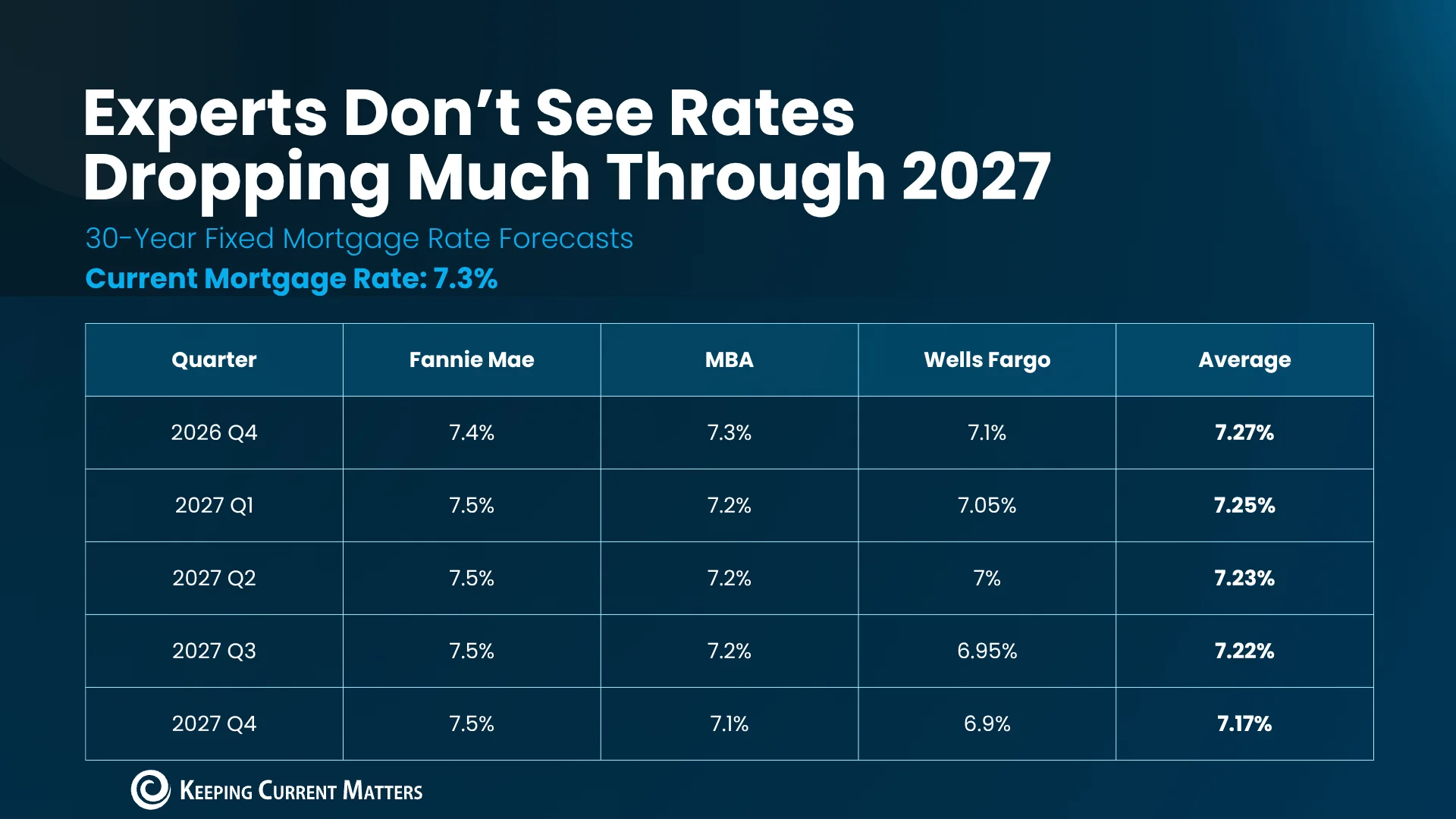
Forecasts are imperfect, and they've missed before, so treat them as a range rather than a promise. Still, when several sources point in the same direction, it's worth paying attention. Waiting for a specific rate is a bet on timing, and timing bets are hard to win.
Consider what happens if rates do fall meaningfully. Buyers who have been waiting would rush back in. More competition means fewer deals, fewer concessions, and sellers regaining the upper hand. The rate you gained could easily be offset by the negotiating power you gave up. This is the 2020 and 2021 pattern playing out in reverse.
That's the trade-off. You might land a better rate down the road, but you'd likely give up the bargaining power you have today. If you're weighing this, compare what you'd save in interest against what you'd give up in price and concessions, not just the rate on the sheet.
Where the window stays open
None of this means you have to move now. You should only buy when the numbers work for your situation. But if you have a real reason to move, today's negotiating power can help those numbers work even at current rates. My read is that the window stays open as long as inventory keeps building. That's a conditional, not a promise, and the conditions can change.
What to watch next
Inventory is the variable to track. If listings keep climbing and days on market keep stretching, the buyer-leaning metros should hold their position. If rates drop sharply, watch how quickly the mix flips back, since that speed tells you how long the advantage lasts.
The 66 metros tilting toward buyers aren't a uniform bloc. Some will move faster than others, and local conditions will decide which ones. National averages hide that spread, which is why the local picture matters more than the headline. Here's the thing: a metro that looks balanced on paper can still feel tight in a specific neighborhood.
Your timeline changes the math, too. The trade-offs described above play out differently depending on how long you expect to stay and how much flexibility you need. If you're working in this space, that's the question to answer first, before you decide whether the current window fits your plans.